
Trois-Vents pass, the last lock on the wind farm
Six turbines, 19.8 megawatts, four years of review. The fate of the Trois-Vents wind farm will not be decided at November's public inquiry, but in one line of a grid connection file nobody has read.
Hakim Zerrouki5 min read
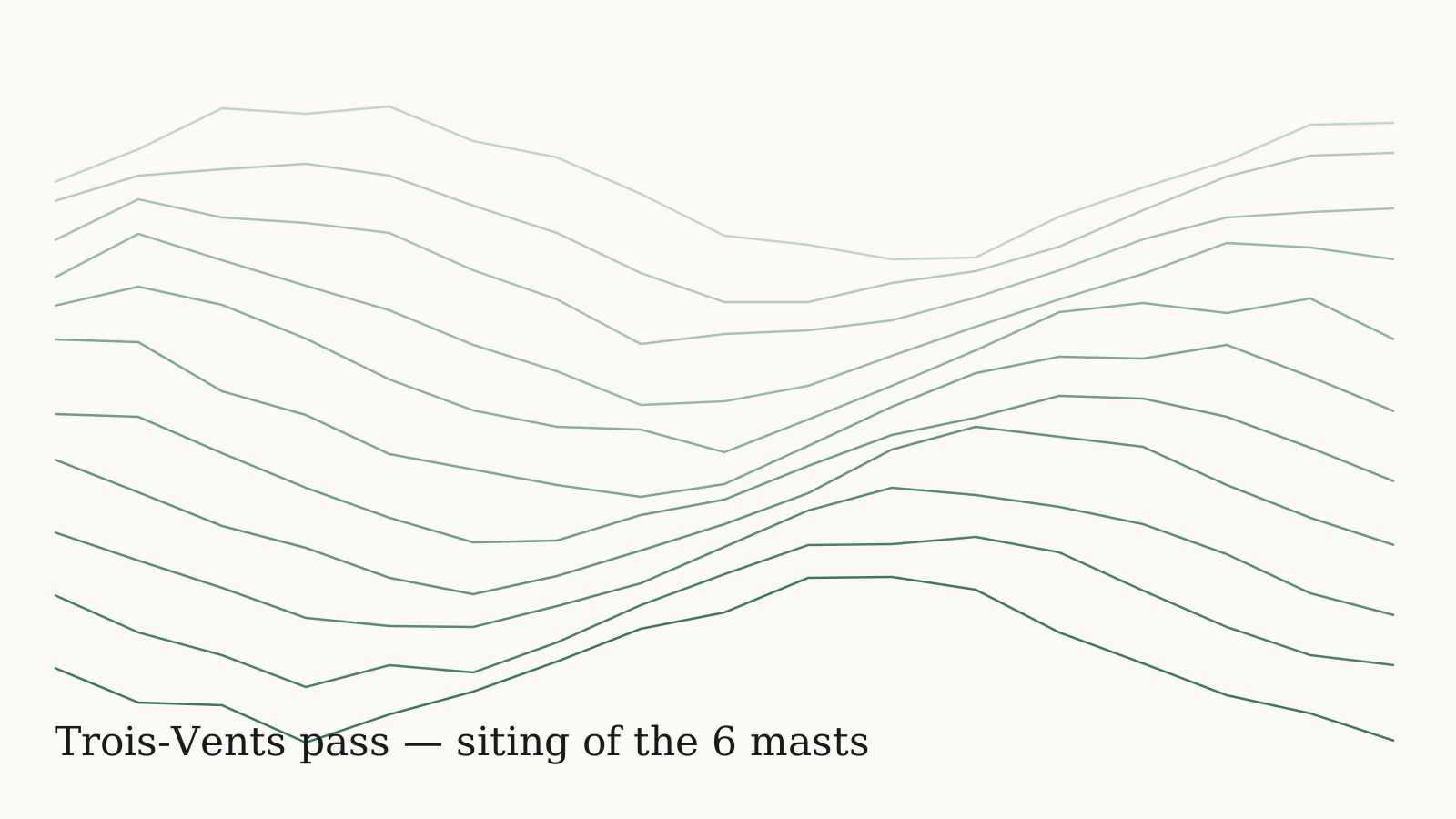
Four years of review, and four years of public discussion about the same thing: the view. From the hamlet of Écharmes, six 180-metre masts along the ridge do change a landscape. That is what the meetings were about, and what the opinion pieces were about, and in all likelihood what November's public inquiry will be about too.
Meanwhile, the question that will actually decide the project has been asked in no room at all. It fits in one line of an eighty-page technical file, lodged in 2024 and consultable ever since: the residual capacity of the substation the farm must connect to.
That line carries a number, 8.4 megawatts, and the project asks for 19.8. Everything that follows comes out of that gap, and none of it has been debated in session.
19.8MW
installed capacity of the project
8.4MW
residual substation capacity, at the last published state
6turbines
along the ridge, at 1,512 m
1,512m
altitude of the Trois-Vents pass
4.2M€
cost of reinforcing the substation, budgeted nowhere
November 2026
public inquiry opens
A substation does not stretch
A wind farm produces nothing if it cannot feed in. Feeding in goes through a substation — the point where the distribution grid meets the transmission grid. Every substation has a hosting capacity, it is published, and it is consumed as connections are accepted.
The one serving the plateau is forty kilometres away. Its residual capacity, at the last published state, does not cover 19.8 megawatts. It covers less than half.
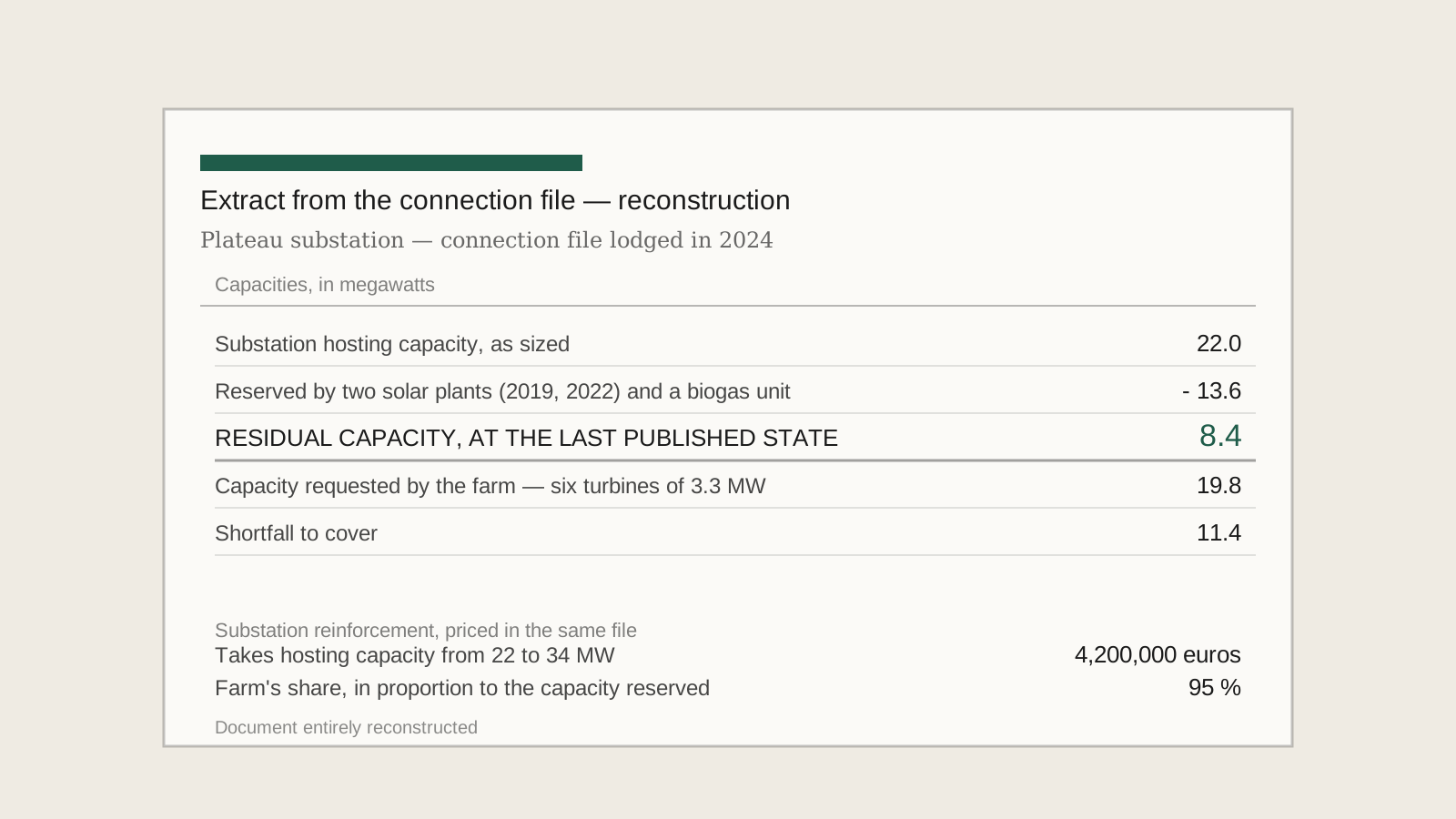
The detail explains the rest. The substation was sized for 22 megawatts of hosting capacity. Two solar plants consented in 2019 and 2022, then a biogas unit, have reserved 13.6 of them — and reserved capacity is deducted on the day of acceptance, not on the day of commissioning. Two of those three installations still produce nothing; they hold the place all the same.
That leaves 8.4. Six turbines of 3.3 megawatts make 19.8; 8.4 divided by 3.3 makes two. As things stand, the substation will take two turbines.
Two ways out, and only one is being discussed. Either the project is sized to what the substation will take, and drops from six turbines to two — 6.6 megawatts, a third of the capacity applied for, which no financing plan presented so far can carry. Or the substation is reinforced, and someone pays for that reinforcement.
The amount is in the 2024 file too: 4.2 million euros to take the substation's hosting capacity from 22 to 34 megawatts. It appears in none of the motions passed so far by the villages involved.
This is not an objection to the project. It is the observation that the variable governing its size, and therefore its economics, has never been put on the table where the councillors deliberate.
Four point two million, and nobody to budget them
A substation reinforcement is not paid for by whoever decides it, but by those who connect to it, in proportion to the capacity they reserve. The reinforcement priced at 4.2 million creates twelve extra megawatts of hosting capacity. The farm would consume 11.4 of them — the 19.8 asked for, less the 8.4 already available. Its share therefore comes to 95 % of the amount, close to four million euros.
That figure decides, and it decides both ways. If the operator can carry it, the project goes ahead with six turbines and the plateau gains 0.6 megawatt of hosting capacity for its own future connections — a workshop, a rooftop array, a heating plant. If it cannot, there is no middle version: you do not reinforce a substation halfway.
It would not be the Hauts authority paying. But the order of magnitude places the decision better than any landscape argument: 4.2 million euros is two thirds of everything the fourteen villages invest together in a year.
That leaves the timetable, which is the real lock. A reinforcement takes five to six years, studies and works included, and it only starts once the connection agreement is signed — so after consent. A farm authorised in 2027 would feed in by 2033 at the earliest.
What the inquiry can still change
It can change the siting at the margins, the mitigation measures, the acoustic curtailment hours. It will not reopen the installed capacity, fixed in the file as lodged.
Nor will it rule on the connection. That is not a procedural oversight: the connection is a matter of agreement between the producer and the grid operator, separate from the environmental consent, and it is put to no public consultation at any stage. An inquiry commissioner may raise the question in a report; there is no mechanism by which he can settle it, and his opinion binds nobody on this point.
Put plainly: November's meeting will be about what is left once the decisive question has been settled elsewhere, by a document nobody asked to see. It has been public for two years.