
Lake Fauge at 41 %: the season the dam said no
41 % full on 12 August, the lowest reading since 1976. The operator of the Fauge dam refused the release three villages were asking for. He had no choice, and nobody had read the rule that forbade it.
Ana-Lucia Ferreiro5 min read
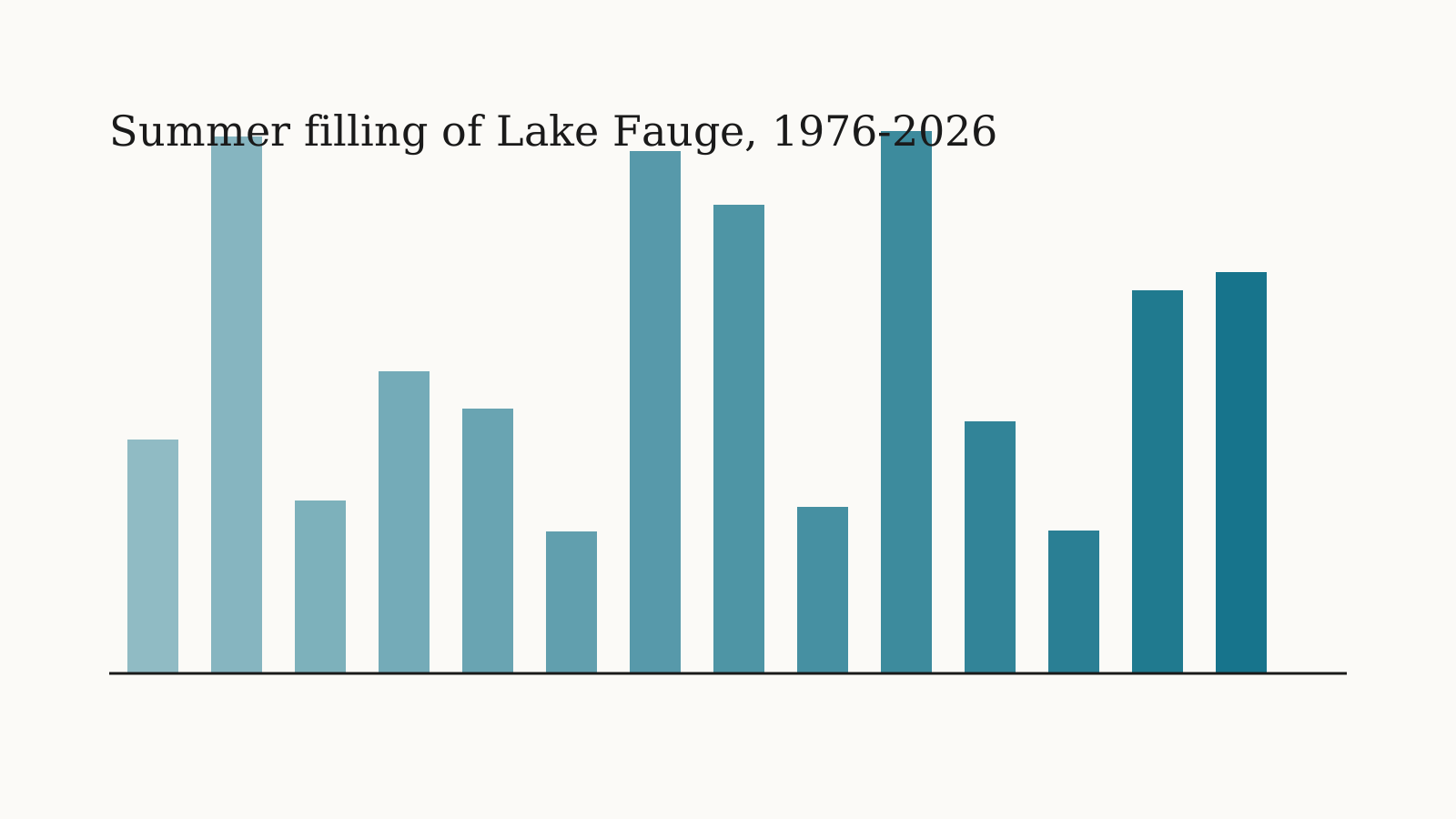
On 12 August 2025 the Fauge reservoir stood at 41 % of capacity. That is the lowest reading in the series, which begins in 1976 — the year that had until then served as the benchmark in every conversation on the plateau.
Three villages asked for a release in the days that followed. The operator refused. The first instalment set out the chain of responsibility; this one shows what that chain produces when it has to contract inside forty-eight hours.
41%
full on 12 August 2025
1.31Mm³
volume actually stored that day
3.2Mm³
total capacity of the reservoir
180,000m³
the release three villages asked for
1976
previous lowest reading
1961
the dam enters service
What the operating rule requires
A dam is not a store you draw on according to the needs of the moment. It is run under a written rule, which sets floor levels by period of the year and the conditions under which a release is possible.
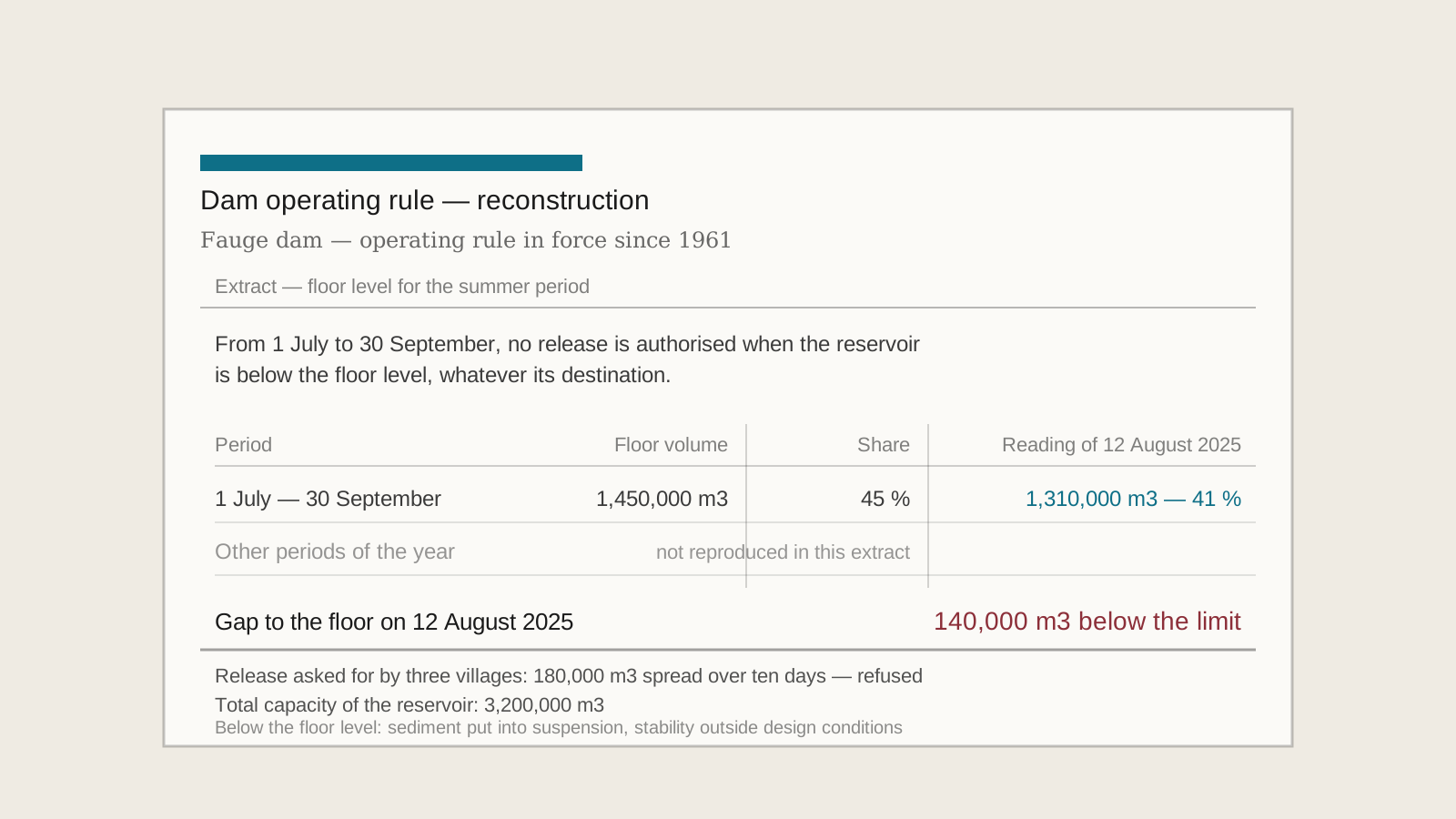
The Fauge rule dates from the dam entering service, in 1961. It sets a summer floor below which no release is authorised, whatever its destination. On 12 August 2025 the reservoir was below that floor.
Volumes state the gap better than percentages. The floor from 1 July to 30 September corresponds to 1.45 million cubic metres, or 45 % of capacity. That day the reservoir held 1.31 million: 140,000 cubic metres below the limit. The release the three villages asked for was 180,000 cubic metres spread over ten days, to support the low flow of the Ambre. Even starting exactly at the floor, it would have breached it.
Put another way, the decision was not a close call. It did not exist: there was no version of the request, no negotiation on volume or on timing, that could have been granted without breaking the document.
What the summer did, day by day
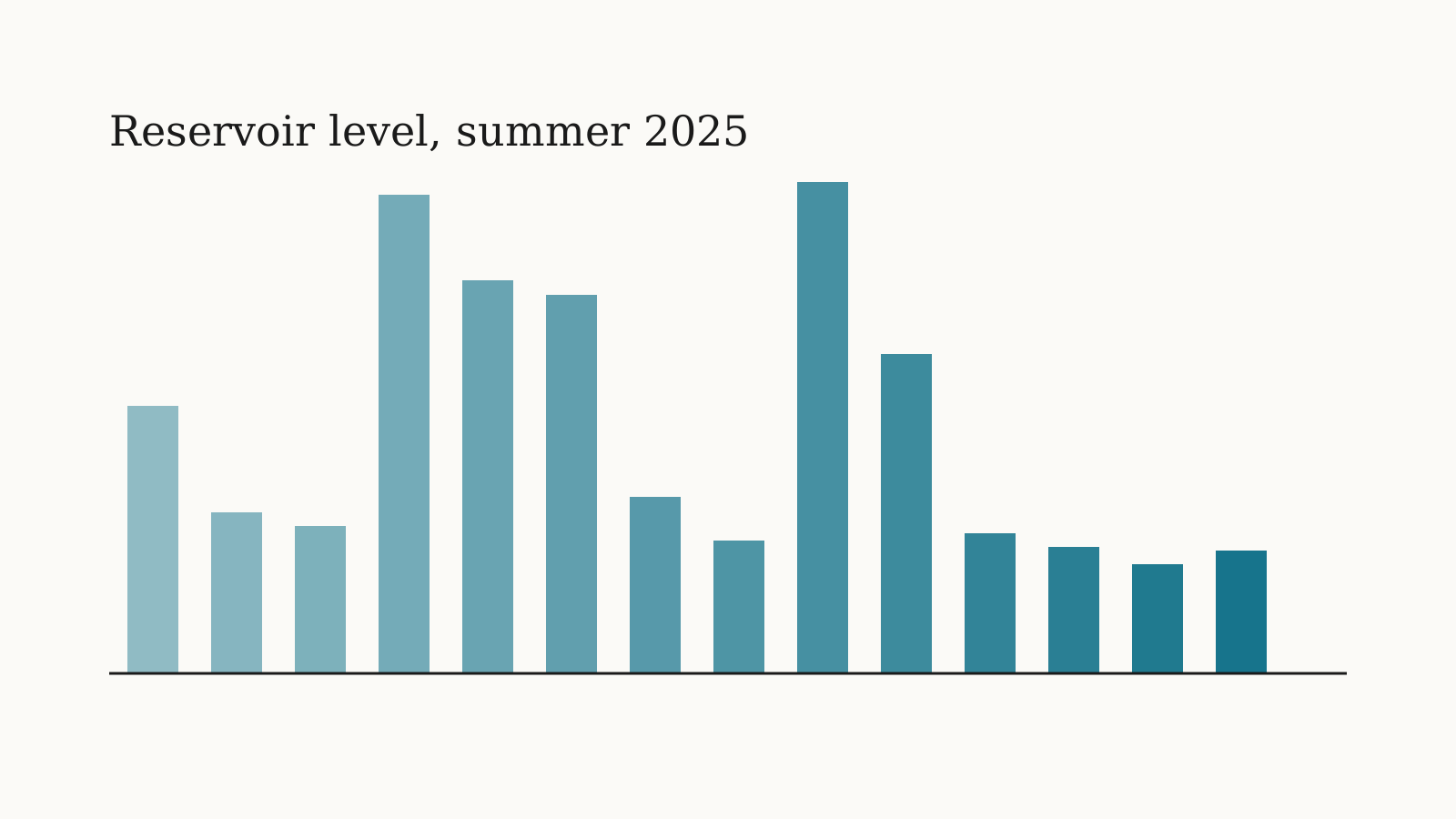
The curve of the summer of 2025 is the least discussed part of the file, and the most instructive. On 1 May the reservoir was at 89 % — an unremarkable value, in the upper half of the last fifty years. On 12 August it was at 41 %. Forty-eight points in a hundred and three days, that is half a point a day, or fifteen thousand cubic metres daily.
On the median of the ten preceding summers, the same date gives 62 %. The 2025 anomaly does not come from a low start, then: it comes from a slope. And a slope is made of two things, what comes in and what goes out. Abstractions over the summer of 2025, read at the meter, are barely above the average of the five preceding ones — less than 4 % apart. What changed is the inflow.
Here it pays to be precise about what can be said. The record kept every morning since 1996 at the Trois-Vents pass, at 1,512 metres, gives +1.4 °C of annual mean and eighteen fewer days of snow on the ground between the decades 1996-2005 and 2016-2025. A thinner snowpack that melts earlier supports a catchment less well in July. That connection is legitimate as one strand of evidence; it demonstrates nothing, and the pass notebook in any case measures one point, not a catchment. The reservoir has no inflow gauge upstream: nobody, on this plateau, measures what goes into the lake.
How the village found out
By telephone, on 14 August, two days after the reading. None of the three villages had a formal channel to the operator: the relationship exists between the state and the operator, not between the operator and the villages.
This is precisely the effect described in the first instalment. None of the five tiers did its job badly; there simply was no circuit to carry, within forty-eight hours, information everyone was entitled to have.
The delay had a visible cost, and it was not in drinking water. The leisure park on the reservoir closed on 3 August, its beach and slipway left dry, without the village being able to warn accommodation providers more than forty-eight hours ahead. Three weeks of season were lost in the middle of August — and the closure was announced as a safety decision, which it was, without the figure of 41 % being made public at that point.
What has changed since
An information agreement was signed in January 2026 between the operator and the Hauts authority. It changes nothing in the operating rule, which is still the 1961 one: it organises the transmission of the weekly reading.
Nor does it say anything about the floor itself, which is the only genuinely arguable object in this affair. A safety level computed in 1961 was computed on a hydrological regime observed before it, and revising it is a matter for the operator and the state, not for the assembly. None of the three villages has asked for that revision; none has read the document.
In other words it fixes the communication problem and leaves the underlying one intact — which arrived on 24 April 2026 in the form of a vote on overnight shut-offs. That is the third instalment.